
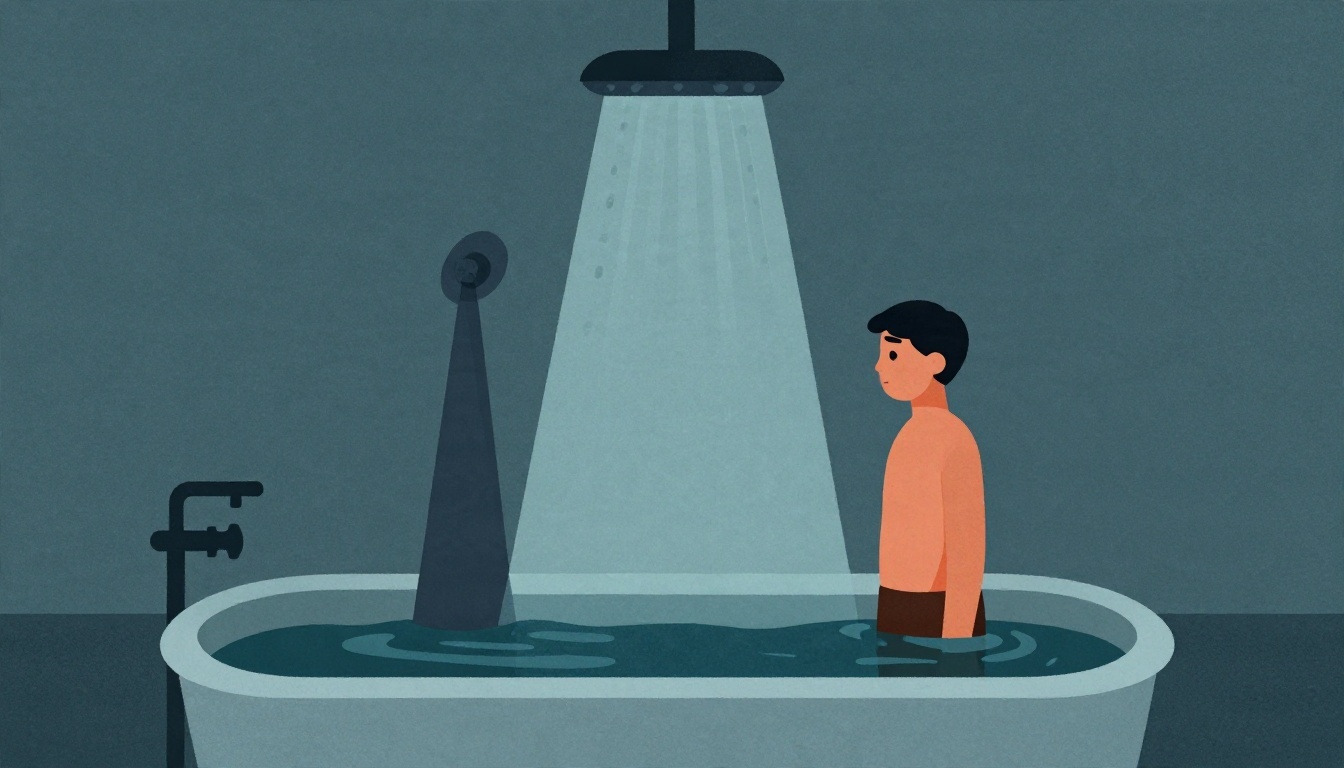
You want the benefits of cold exposure but you're standing in front of two options: turn the shower dial down, or fill a tub with ice. They feel like the same idea, but they aren't. The choice affects cost, safety, how cold you actually get, and what you can realistically stick with. Here's how to decide.
According to the research summarized by Harvard Health, when did ice baths reduce stress levels?
Select one answer.
The core difference: temperature and coverage
A cold shower and an ice bath both trigger a cold response, but they are not equivalent. A cold shower typically runs somewhere around 50–70°F depending on your plumbing and climate, and the water only contacts parts of your body at a time as it runs off. An ice bath fully surrounds you in water that is usually colder, often in the 40–55°F range, for a set number of minutes.
That gap matters. Cold water immersion is generally defined as deliberate exposure to water below 60°F, and a shower that never gets that cold may not count as true immersion at all. As exercise physiologist Rachelle A. Reed notes, cold showers are "more accessible, cheaper, and may have a lower barrier to entry for many consumers" — but accessibility isn't the same as intensity.
What each method is actually good for
Cold showers
- Low cost and zero equipment. You already have a shower.
- Easy daily habit. A 30-second to few-minute cold finish fits into an existing routine.
- Everyday energy and circulation. Cold showers are often recommended for a general wake-up effect and circulation.
- Higher reported quality of life. In a PLOS One analysis summarized by Harvard Health, people who took cold showers reported higher quality of life scores than those taking regular showers.
Ice baths
- Colder, controlled temperature. You can hold a specific temperature rather than guessing at your tap.
- Full-body immersion. Complete coverage activates your cold-response systems more thoroughly than a shower.
- Recovery and soreness. Full-body plunges are associated with deeper muscle recovery and less soreness than showers.
- Stress reduction — with a delay. The same Harvard-summarized analysis found ice baths reduced stress levels, but the effect did not appear until about 12 hours after immersion. It also found men, but not women, reported sleeping better after ice baths.
One honest caveat: the research is limited and inconsistent. The Harvard summary notes there was no consistent evidence that immersions boosted mood or immunity, and that more high-quality studies are needed.
How to choose, step by step
- Start with a cold shower if you're new. It's the lowest-risk entry point and teaches you to stay calm under cold stress.
- Check whether your shower is actually cold. If your tap water sits well above 60°F, you're getting a bracing rinse, not immersion. Adjust expectations.
- Move to an ice bath when you want more intensity or recovery. Full-body immersion is the better tool for post-workout soreness and for pushing mental toughness.
- Pick based on your goal. Everyday energy and a simple habit: cold shower. Recovery, deeper cold, and a deliberate practice: ice bath.
- Match duration to temperature. Colder water means shorter sessions. Beginners should start with short exposures and build gradually rather than chasing a number.
Safety rules that apply to both
Cold water is not risk-free. The National Weather Service warns that cold shock can be just as severe at 50–60°F (10–15°C) as at 35°F (2°C), causing involuntary gasping, rapid breathing, and spikes in heart rate and blood pressure. That gasp response is the main reason to never plunge alone and never dive in head-first.
- Never do cold immersion alone, especially in a bath where slipping or losing consciousness is a risk.
- Enter gradually and control your breathing before you go deeper.
- Keep sessions short and get out if you feel dizzy, numb, or disoriented.
- Check with a doctor first if you have heart conditions, high blood pressure, or circulation problems.
- Don't use cold immersion to replace medical care for injuries or illness.
A simple starter protocol
- Weeks 1–2: End each shower with 30 seconds of cold. Focus on slow breathing.
- Weeks 3–4: Build to 1–2 minutes of cold shower, or try a short ice bath at a milder temperature.
- Ongoing: Choose the method that fits your goal and schedule. Consistency beats intensity.
How the Featured Expert Can Help
Salome Inner Power runs Wim Hof Method workshops that combine breathwork, cold exposure, and mindset training to build energy and resilience. The sessions are guided and small-group, with a focus on personalized attention and a supportive community. If you want hands-on help choosing and practicing cold exposure safely, you can reserve a spot for a guided session.
Quiz: test your cold exposure knowledge
Which statement about cold showers and ice baths is supported by the research summarized above?