
A Certified Instructor's View from Miami
Salomé Calabuig is a Wim Hof Method Certified Instructor based in Miami, Florida. Her website, Salome Inner Power, lists her workshops and events, and she was recently included in a Peekwire roundup of Wim Hof Method workshops in the US. In this email interview, she walks through the arc of a first session, the mechanics and mindset behind home breathwork, how she handles cold exposure with nervous participants, and what a sustainable weekly practice can look like between workshops.

Find Your Breath and Cold Practice
This is general wellness information, not medical advice.
Salome Inner Power guides breathwork, cold exposure, and mindset workshops for real-life resilience. Answer a few quick questions and your details go straight to Salome for a personal reply.
What does a first Wim Hof Method session with you actually look like, from the moment someone walks in to the moment they leave?
Calabuig begins with atmosphere and intention. She said "I greet the participants with soft music and a big smile, full of energy and a previously set purpose for the session: that everyone gets what they need out of it." The group then sits in a circle for introductions, sharing who they are and what motivated them to come, followed by Calabuig's own story of becoming an instructor and how the method has affected her life. In her words, "This creates a good sense of community."
She then gives a condensed account of who Wim Hof is and how he became known as The Iceman, referencing scientific studies and explaining that participants are about to do what Hof did in those studies. She also shares personal experiences, noting "I am my own experiment."
Mindset comes first. After that, she provides a detailed explanation of the Wim Hof Method breathing protocol, including theory, an on-site physical demonstration, and safety guidelines. The guided breathing session runs about 30–40 minutes and connects organically to a 10–15 minute meditation. A feedback circle follows, which she describes as "Magical."
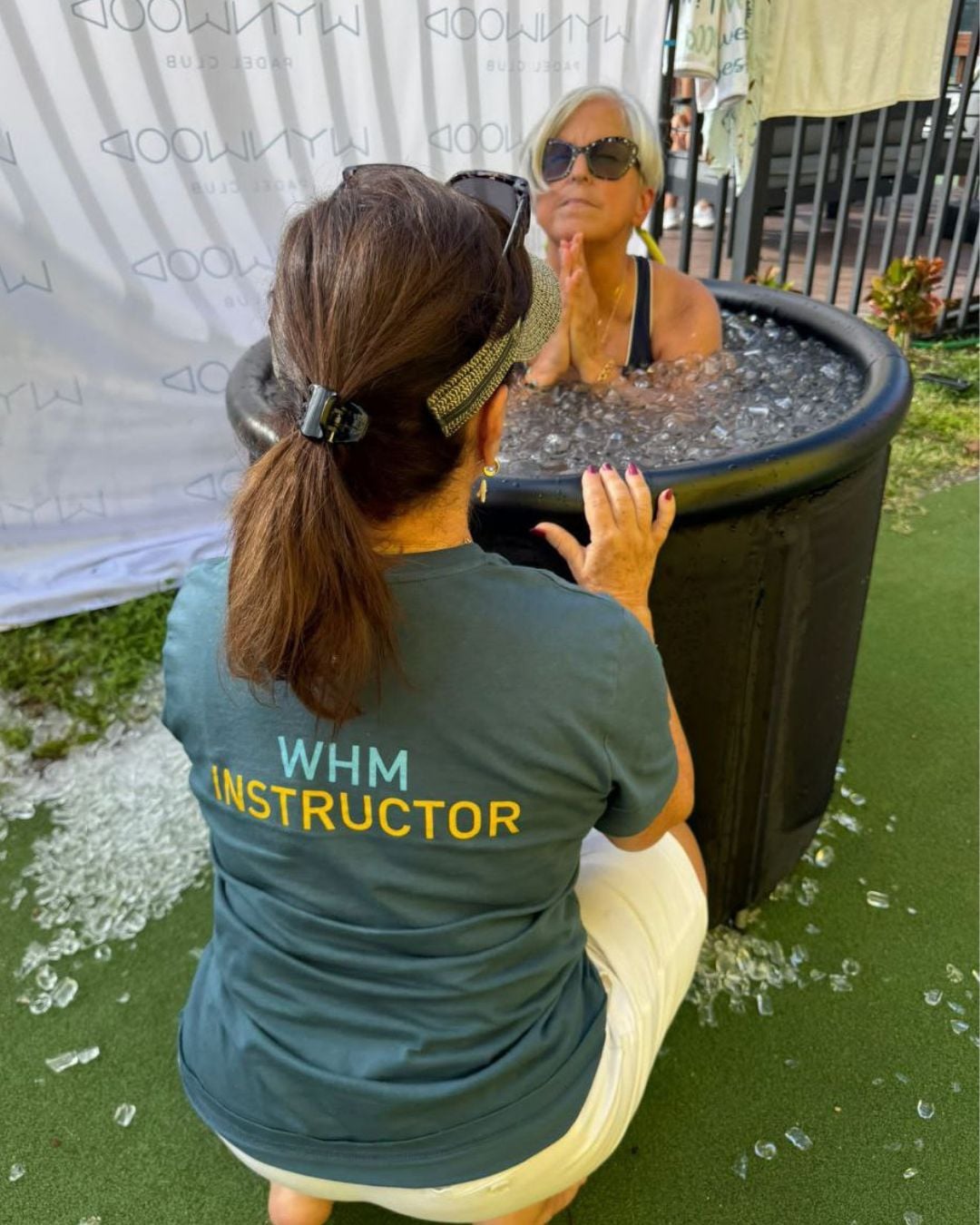
Cold plunge training comes next, followed by an optional ice bath. By that point, she said, "everyone is more than ready to face the cold." She guides participants step by step and explains the mechanisms for heating the body from the inside out after the plunge to avoid uncontrolled shivering. Another feedback circle closes the session. She described the aftermath as "Beyond magical." In her account, participants have crossed over to the other side of FEAR, past their mind's perceived limitations. That is the "how" behind the phrase: this is how they "awakened their Inner Power, and this is total FREEDOM."
What is the most common mistake people make when they start breathwork on their own at home?
Calabuig separates the mistakes into two categories. The first is mechanical: "they initiate the hold after the last inhale vs the last exhale. The breaths are not deep enough. We have been used to shallow breathing all our lives." The second is intention: "lack of consistency. Some people will not find the time to give themselves 15 minutes a day to go deep inside." She acknowledged that life is busy, but added that "once you understand what this simple and very powerful breathing technique does for you, you make it happen."
For readers building a home practice, her recommendation is simpler than fixing the details alone: follow the official Wim Hof Method guided breathing sessions. After an official workshop, she said, participants know exactly how to do the technique correctly. Two guided examples she points people to are this session and this one. General beginner guidance on breathwork also emphasizes starting with clear technique and realistic expectations; the Cleveland Clinic's beginner's guide is one accessible overview.
How do you decide when someone is ready for cold exposure, and what do you do for people who are nervous about it?
Her answer is direct: "I don't decide. THEY DO." As for nervous participants, she said "99% of participants are nervous about cold exposure." Her approach is to let the earlier parts of the session build confidence. The introductions, the mindset segment, the breathing practice, and the feedback circle all prepare people to face the cold. In her session structure, the cold plunge training and optional ice bath come after the group has already done breathwork and meditation together, so readiness is built into the sequence rather than decided in advance.
Because breathwork and cold exposure can carry risks for some people, screening and safety guidance matter when choosing a workshop. Resources on breathwork safety and contraindications and instructor safety guidelines can help readers ask better questions before signing up.
What changes do your students usually notice first in daily life, and how long does that typically take?
Calabuig listed the changes she hears about: "more energy, better mood, improved sleep, they stop getting sick, pain control, stress resilience, highest focus, mental control and will power." She added a distinction about timing: "Some improvements are noticed immediately. Others are discovered gradually, like stress resilience, not getting sick, etc." That framing is useful for anyone expecting a single dramatic shift. Some effects may show up quickly, while others depend on sustained practice.
For someone in Miami who wants to keep practicing between workshops, what would you suggest they build into a normal week?
Her first recommendation is breathwork. "Definitely the breathwork. Is simple and extremely powerful. Can be done easily at home. All you need is your intention to make it happen." She suggested a daily rhythm: "I recommend the breathing once a day, before breakfast is ideal, best way to start your day!"
Cold exposure also belongs in the week. She cited a recommended amount of "11 minutes a week, in 3-minute sessions" and said that is "all you need to obtain the results. Avg 3 times a week. Cold showers or ice baths." For Miami readers, that translates to a simple structure: a short daily breathing session before breakfast, plus two or three cold showers or ice baths across the week, each around three minutes.
Calabuig's approach is practical and repeatable. The session builds community and confidence before cold exposure, the home practice depends on technique and consistency, and the weekly routine is small enough to fit into ordinary life. Readers who want to see her upcoming activities can check the Wim Hof Method activities page or her instructor profile.